The complete sunscreen decision guide
The visual comparison above gives the fast answer. Use the detailed chapters below when finish, makeup, humidity, commuting, portability and reapplication change what the right purchase looks like.
01
Identify the exact sunscreen before comparing
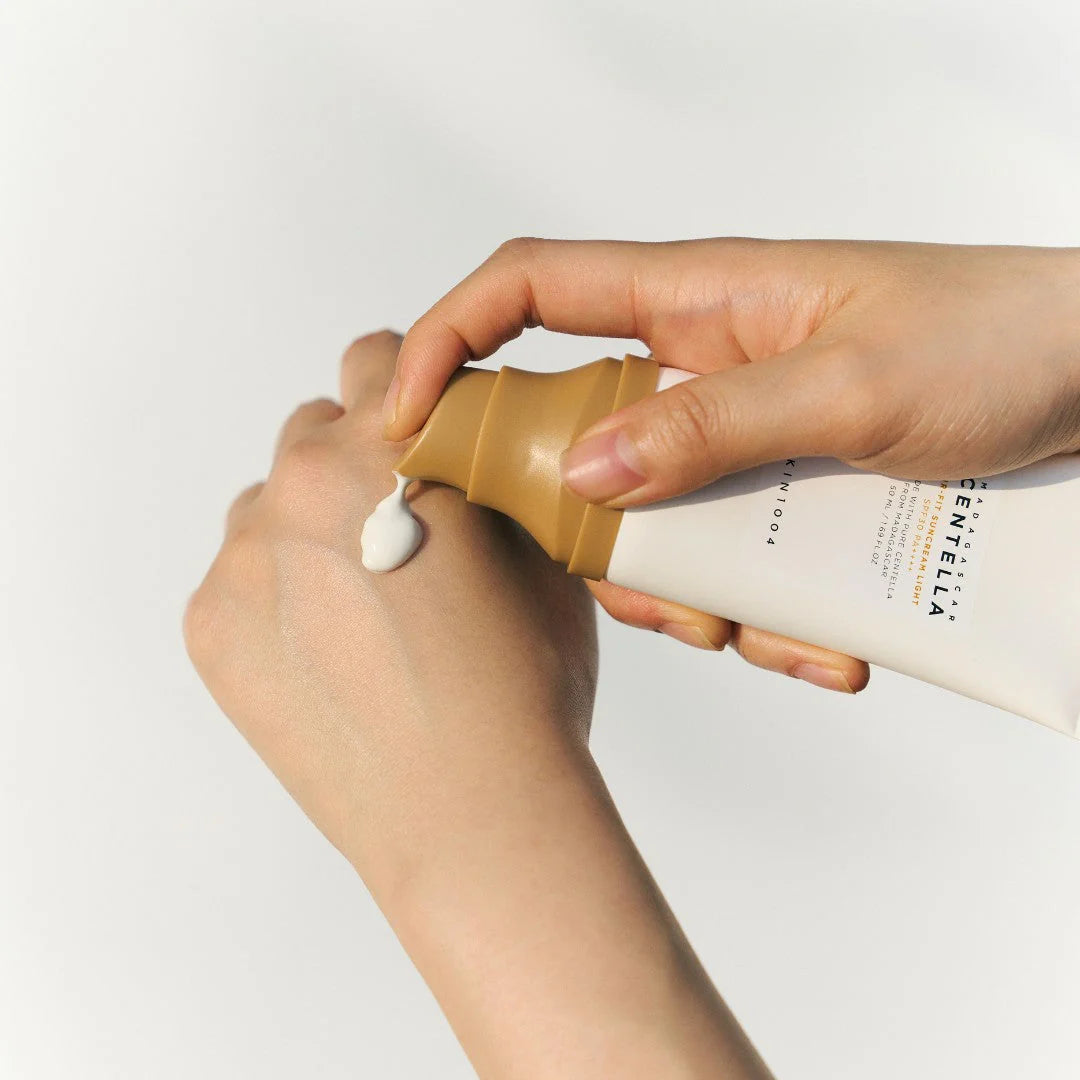
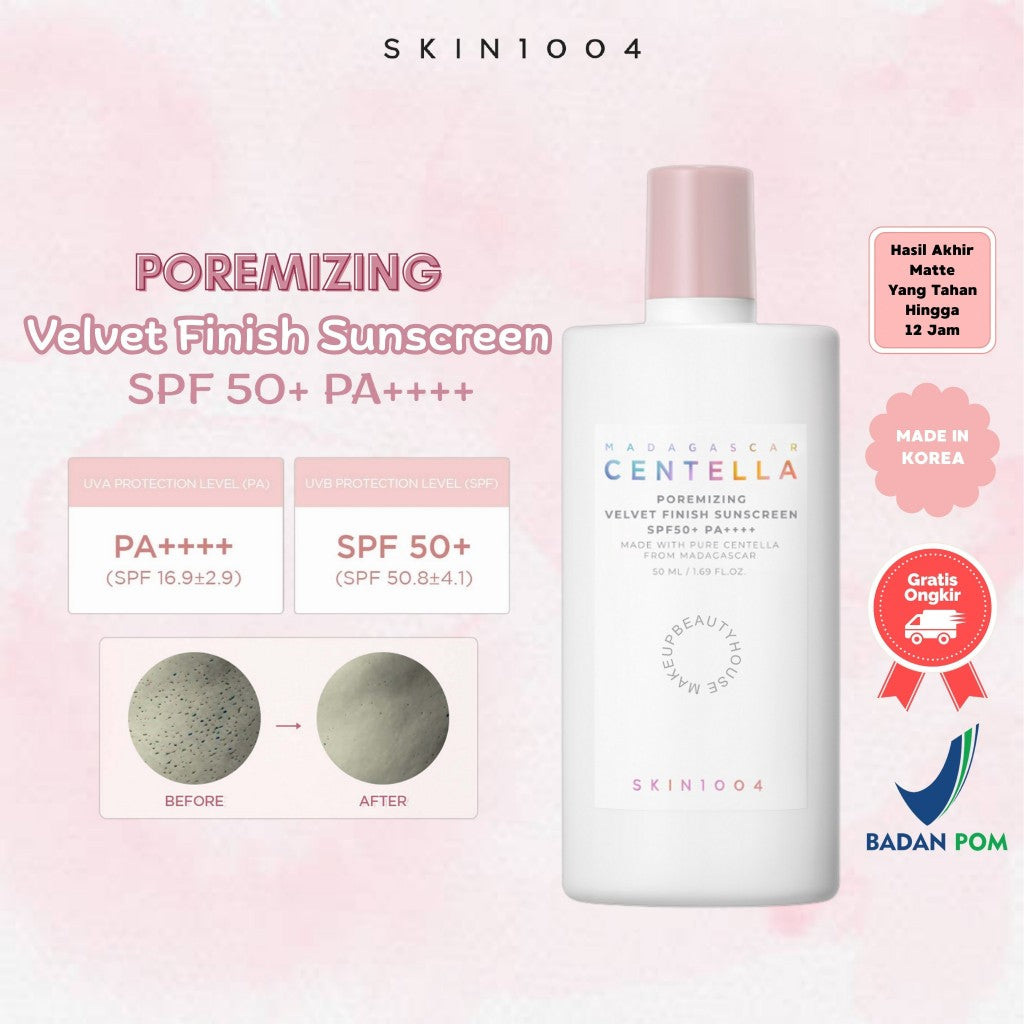
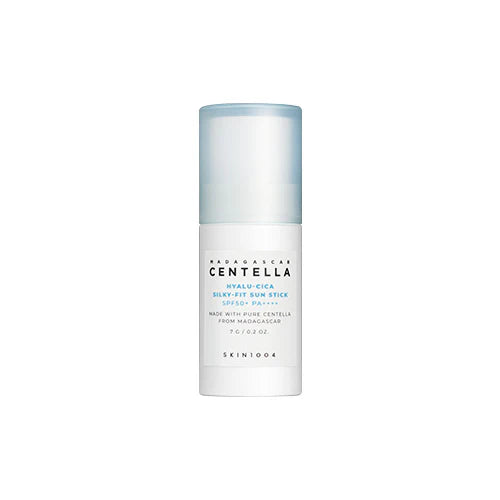
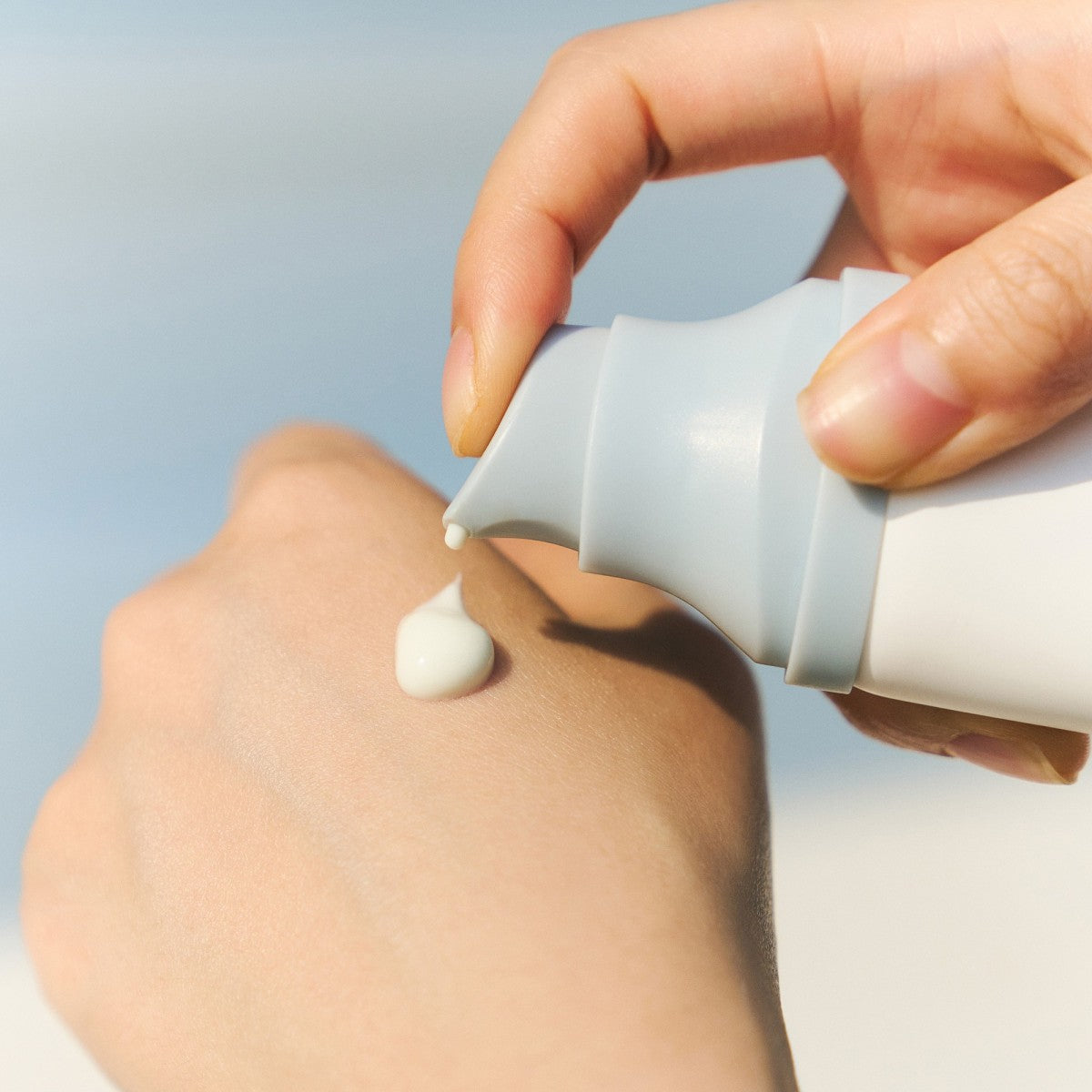
The four products on this page belong to one brand, but they are not interchangeable versions of the same formula. The exact names matter: Hyalu-Cica Water-Fit Sun Serum, Centella Air-Fit Suncream Light, Poremizing Velvet Finish Sunscreen and Hyalu-Cica Silky-Fit Sun Stick. A review that mentions only “Air-Fit” or only “the SKIN1004 sunscreen” may be discussing something different, so start by matching the full name and the product format.
The official pages currently list Water-Fit, Poremizing Velvet and Silky-Fit Sun Stick at SPF50+ PA++++. The exact Air-Fit Suncream Light discussed here is listed at SPF30 PA++++ and is presented by SKIN1004 as a mineral sunscreen. Keeping those identities separate prevents a common buying mistake: carrying a specification, review or expectation from one product onto another simply because the names look related.
02
Water-Fit is the dewy route
Water-Fit is the logical place to begin when you prefer a fresh, skincare-like sunscreen finish rather than a visibly dry or powdery result. SKIN1004 positions the product with a dewy direction and no-white-cast messaging while listing SPF50+ PA++++. That combination can be attractive if your makeup is light, you enjoy luminosity, or you simply dislike the sensation of a more matte sunscreen sitting on top of your morning routine.
Dewy does not mean universally better for dry skin or automatically wrong for oily skin. Your moisturizer, humidity, foundation and the amount of skincare underneath all change the final appearance. If you enjoy Water-Fit when you apply enough product, it may be a good cosmetic fit. If you repeatedly reduce the amount because you dislike the shine, that is useful evidence that Velvet deserves a closer comparison.
03
Velvet starts from a quieter finish
Poremizing Velvet Finish Sunscreen addresses a different cosmetic priority. SKIN1004 lists SPF50+ PA++++ and positions the formula around a velvet finish with an oil-control direction. For a shopper who already knows that excessive luminosity is what makes sunscreen uncomfortable, that distinction can matter more than another long ingredients debate. Water-Fit and Velvet can therefore satisfy two different people even when both are legitimate options from the same brand.
Treat the word velvet as a finish direction rather than a promise that every complexion will look identical. A rich moisturizer underneath, a glowy primer or a luminous foundation can change the final surface. The useful comparison is Water-Fit as the more dewy starting point versus Velvet as the more restrained starting point, followed by testing both ideas against the real products you wear with sunscreen every morning.
04
Air-Fit Light is the mineral branch
If mineral format is a non-negotiable requirement for you, the comparison becomes much simpler. The exact Centella Air-Fit Suncream Light product is presented on SKIN1004's official page as a daily light mineral sunscreen and is listed at SPF30 PA++++. That makes it a distinct branch of the decision tree rather than merely another finish beside Water-Fit and Velvet. Confirm the exact Light product before relying on a review because related Air-Fit naming can create confusion.
After you establish that mineral format is the priority, continue with the normal practical questions: does the published protection rating fit what you are planning, is the texture comfortable, and can you apply it as directed without trying to compensate for the finish? Mineral preference can be an important personal filter, but it does not remove the need for correct application, reapplication where appropriate or other sensible sun-protection measures.
05
The stick solves a portability problem
Silky-Fit Sun Stick earns its place in this comparison mainly because its solid format changes what is possible once you leave home. SKIN1004 lists it at SPF50+ PA++++ and positions it with a silky, matte direction and no-white-cast messaging. On a Lebanese workday with a morning commute, lunch outside, errands and a later drive, a compact product that can remain in your bag may solve a behavior problem that another bathroom-shelf bottle cannot.
Convenience should not be confused with automatic coverage. A stick can be easy to access, but you still need to use it carefully and follow the product directions instead of assuming that one quick swipe gives whatever protection you had in mind. Think of portability as the reason to consider the format. Then judge application, comfort and how realistically it fits into your actual day.
06
Humidity changes the routine around the sunscreen
A routine that feels elegant in January can feel unnecessarily heavy during a humid Beirut morning. The sunscreen itself may not be the only reason. Serum, moisturizer, sunscreen, primer and foundation can create a very different experience when heat and humidity increase. If the routine suddenly feels greasy, first review the layers underneath instead of responding by quietly applying less sunscreen and weakening the very step you are trying to maintain.
Water-Fit may need a lighter supporting routine on humid days, while Velvet can feel more attractive when you want a less luminous starting point. During cooler weather the preference may reverse. Seasonal adjustment is normal skincare behavior. It is often more useful to simplify or rebalance the surrounding products than to declare that one sunscreen permanently failed because it felt different in one weather condition.
07
Air conditioning creates the opposite test
Lebanese summer can mean strong humidity outside and hours of aggressive air conditioning inside. A face that feels shiny during the commute can feel tight later in the office. This is why simple skin-type labels cannot answer every sunscreen question. The final experience comes from the sunscreen, moisturizer, cleansing routine, indoor environment and makeup working together across the whole day rather than during the first five minutes after application.
If you feel tightness, review preparation and hydration as well as the sunscreen. If you feel excessive weight, review how many rich layers sit underneath it. Change one variable at a time so the result tells you something. Replacing moisturizer, sunscreen and primer simultaneously may produce a nicer morning, but it will not tell you which change actually solved the problem.
08
Makeup compatibility must be tested with your makeup
There is no honest universal answer to “Which one is best under makeup?” because foundation systems are different. A skin tint, cushion, long-wear foundation, concealer-heavy base and powder foundation can all behave differently over the same sunscreen. Primer adds another variable. The useful test is the exact combination you wear, not a hand swatch or a reviewer's routine that happens to look beautiful on someone else's skin.
Apply the sunscreen properly, allow it to settle, then use your normal makeup technique. Check the result later around the nose, hairline, cheeks and areas where products tend to gather or separate. Water-Fit gives you the dewier starting point; Velvet gives you the quieter one. Your own base products determine which combination actually lasts more gracefully.
09
Pilling is often a combination problem
When tiny rolls of product appear while applying makeup, the sunscreen gets blamed immediately. Sometimes it is involved, but pilling can also come from several film-forming layers, too much moisturizer, a primer that does not cooperate, insufficient settling time or repeatedly rubbing the same area. A complicated routine makes the cause harder to identify because several variables are changing at once.
Troubleshoot by simplifying. Remove one unnecessary layer, give the previous step time to settle and avoid overworking the skin. If the sunscreen suddenly behaves better, you learned something useful without buying a replacement. A product that pills over five layers can behave very differently over two. That real combination test is more informative than declaring a formula incompatible after one hurried morning.
10
Never solve shine by using too little
If a sunscreen gives you the cosmetic finish you want only when you use a token amount, the finish may simply be a poor match for you. The better solution is not to preserve the appearance by intentionally under-applying. It is to find a format and finish that you are comfortable using according to the instructions. Cosmetic comfort matters because a product you resent applying will always be harder to use consistently.
This is why Water-Fit versus Velvet is not merely a beauty question. Someone who dislikes shine may use Velvet more willingly and correctly. Someone who finds matte-feeling finishes unpleasant may prefer Water-Fit. The practical winner is the suitable product that fits your behavior, not the one that wins a generic ranking while encouraging you to compromise the application.
11
Map the commute before choosing the format
“I work indoors” often describes only the middle of the day. The real schedule may include leaving home, walking to the car, driving, parking, entering the building, going out for lunch, returning to the car and doing another errand before getting home. You do not need to become anxious about every transition, but the sunscreen plan should represent the day you actually live rather than an oversimplified label.
Once you map those transitions, portability may become important or may turn out not to matter at all. If you are home early, one morning format may be enough. If your day routinely stretches into late afternoon, having a practical product available later can reduce friction. That is where the stick format can earn a clear role instead of becoming an impulse purchase.
12
Plan reapplication before the day gets busy
A reapplication plan works better when you decide it in the morning instead of hoping you will improvise later. Think about where the product will be, whether makeup is involved and what the afternoon actually looks like. Some people may prefer a fluid product for the deliberate first application and a portable format later. Others can happily use one product throughout the day. There is no need to create complexity when simplicity works.
The useful principle is access. A product that lives in the correct bag or desk drawer is easier to remember than one sitting at home. If your exposure continues, or water, sweat, rubbing or toweling affects the sunscreen layer, the later part of the routine deserves more attention. Follow the product directions and combine sunscreen with sensible protection rather than relying on memory and luck.
13
Beach days are not just a finish comparison
For an extended beach day or outdoor event, the difference between dewy and velvet is only one piece of the decision. Shade, appropriate clothing, a hat, sunglasses and sensible timing can all contribute to protection. Reapplication becomes more important when exposure continues and when water, sweat or friction can disturb the sunscreen layer. A formula that feels excellent for a short office morning should not be treated as the complete strategy for a long day outside.
The better question is which sunscreen you can apply properly and maintain within a broader plan. Water-Fit, Velvet, Air-Fit Light and the Stick each solve different format or finish preferences, but none removes the need for good behavior around prolonged sun exposure. Choose a product that makes compliance easier, then build the rest of the day around the conditions you actually expect.
14
Seasonal rotation can be smarter than loyalty
There is no rule saying one sunscreen must remain your favorite for twelve months. A luminous Water-Fit finish may feel particularly comfortable during cooler or drier periods, while Velvet may become more attractive during hot and humid weather. Your moisturizer and makeup also change with the season, so the same sunscreen can sit differently even if its own formula has not changed at all.
Rotating between two suitable products is not evidence that one failed. It can simply mean you are responding to different environments. The important point is to understand why you prefer each option. If the reason is clear—finish, format, makeup compatibility or portability—the routine is easier to repeat than when you keep buying new products because a trend tells you the old one is no longer exciting.
15
Price is a live variable, not a permanent specification
At the Kourienty snapshot used during this comparison, Water-Fit appeared at $20, Air-Fit Light at $20, Poremizing Velvet at $21 and Silky-Fit Sun Stick at $13. Those figures are useful shopping context, but they should never be presented as permanent prices. Promotions, inventory and store pricing can change, so the live Kourienty product page is the correct place to confirm the amount immediately before ordering.
Value is also more than the lowest price. A cheaper sunscreen you dislike and avoid using is poor value. A portable stick may justify its role because it solves an access problem, while another shopper may have no reason to buy it at all. Compare what each product contributes to your routine rather than treating four different formats as if cost alone makes them equivalent.
16
Popularity discovers products; it does not know you
A viral sunscreen can be worth investigating, but social popularity cannot see your moisturizer, foundation, commute, finish preference or tolerance for particular textures. Reviews are excellent discovery tools. They become weaker decision tools when you forget that the reviewer is testing the product inside a completely different routine and climate. Use popularity to build the shortlist, then return to the exact product specifications and the problem you personally want to solve.
Ask the concrete questions. Do you want dewy or velvet? Is mineral format genuinely important? Is portability the issue that keeps breaking your routine? Are you wearing foundation every day? These questions usually narrow the decision faster than watching another ten rankings. A comparison becomes useful when it turns attention away from hype and back toward repeatable behavior.
17
Check the exact item when the order arrives
When your order arrives, confirm the full product name, size and format against the item you intended to purchase. Read the label and directions before use, and contact the seller if the product arrives damaged or materially different from the listing. Korean beauty packaging can evolve over time, so a visual change alone should not automatically be treated as proof of a problem.
At the same time, similar packaging is not enough to assume two formulas are identical. This is especially important with product families that use related naming. Exact identification matters before checkout and after delivery. If you are uncertain, compare the product name and published information with the brand's current official page rather than relying only on an old photo saved from social media.
18
A finish problem and a concerning reaction are not the same
A sunscreen that looks too shiny or feels less elegant than expected may simply be a cosmetic mismatch. Significant burning, swelling, marked persistent redness or another concerning reaction belongs in a different category. Stop using a product that causes a concerning response and seek appropriate professional guidance when needed rather than trying to tolerate symptoms because the product is popular.
A shopping comparison can explain published specifications, formats and finish directions. It cannot predict how every individual will react and cannot replace personal medical advice. If you already know that your skin reacts easily, introduce new products carefully and keep the decision process conservative. Comfort should never require ignoring a reaction that concerns you.
19
You almost certainly do not need all four
The purpose of putting four products on one page is to reduce wrong purchases, not to encourage a collection. Water-Fit may be the only sunscreen you need. Another shopper may choose Velvet because finish is the deciding factor. Someone who specifically wants mineral format may focus on Air-Fit Light. The Stick may make sense only for a person whose main challenge is carrying something practical during a long day.
Give every product a job before it earns a place in the routine. If two items solve the same problem and you already prefer one, you do not need both simply because the comparison made them interesting. A smaller routine that you understand is often easier to use correctly than a shelf full of options that were purchased without a clear role.
20
If two work, preference can decide
Not every product comparison needs one universal winner. Water-Fit and Velvet can both be suitable for the same person while creating different cosmetic experiences. If they both apply comfortably, cooperate with makeup and fit your protection needs, your preference for glow or a quieter finish can legitimately decide between them. The answer might even change by season without either product becoming objectively bad.
This is a useful point because beauty shopping often pushes people toward absolute rankings. Sunscreen is more practical than that. Once the non-negotiable requirements are satisfied, comfort and consistency matter. Choosing the product you enjoy using is a rational decision when that enjoyment makes the routine easier to repeat.
21
Moisturizer can change the verdict
Judge moisturizer and sunscreen as a pair when you evaluate comfort. If the morning feels too heavy, consider whether you need the same rich moisturizer underneath that day. If the combination feels dry or uncomfortable, review the preparation instead of deciding that the sunscreen alone failed. The supporting routine can amplify or soften the cosmetic character of every sunscreen in this comparison.
The useful goal is not to create the most complicated skincare stack possible. It is to build the smallest combination that keeps your skin comfortable while allowing you to apply sunscreen properly. Testing one adjustment at a time prevents you from replacing a good sunscreen because another layer was actually causing the problem.
22
Foundation users should run a real wear test
If foundation is part of your normal weekday, test sunscreen and foundation together before committing to a verdict. Apply the sunscreen, allow it to settle and then use the same base products and tools you normally use. Look at the finish after real wear, not only immediately after blending. A formula can appear beautiful at 8 a.m. and behave very differently once the routine has experienced heat, movement and several hours.
If repeated shine is the problem, Velvet becomes the logical product to compare. If you like luminosity and your base sits well over it, Water-Fit may be more attractive. The key is that the test reproduces your life. Makeup compatibility cannot be proven by a reviewer who uses different products, different preparation and different application techniques.
23
The stick does not have to replace your morning sunscreen
The appeal of a stick is convenience, but convenience does not require you to force the same format into every step of the day. Some people may prefer a fluid sunscreen for a careful morning application and keep a stick available for later use. Others may develop a different system that fits them better. What matters is following the exact product instructions and paying attention to coverage rather than speed alone.
This prevents a common category mistake: assuming the most portable option must automatically be the best all-purpose option. A format earns its place when it solves a real problem. If portability is not a problem for you, the stick may be unnecessary. If portability is exactly what makes later access possible, its role becomes much clearer.
24
No-white-cast claims still need real-world context
No-white-cast positioning is useful information, particularly when visible residue is one of your biggest sunscreen frustrations. Water-Fit and the Silky-Fit Stick are presented by SKIN1004 with that direction. Even so, the visible experience can vary with skin tone, application, surrounding skincare and the amount used. Product positioning should guide expectations without becoming a guarantee that every person will see an identical result.
Format matters here too. A fluid sunscreen, a mineral cream and a solid stick do not create the same application experience. Compare the exact product in front of you instead of treating “no white cast” as a universal description of the entire brand. The more specific the question, the more useful the answer becomes.
Shop these SKIN1004 sunscreens on Kourienty
Shopping in Lebanon? Every product link below opens the matching Kourienty listing. Specification claims in this guide were checked against SKIN1004 official product information.
Specifications are tied to the exact official SKIN1004 pages above. Kourienty price, stock and promotions should always be checked live before ordering.